MeteorMate
Role
Lead Product Designer
Date
Summer 2025 - Present
Project
Product Design | 0->1 | Roommate Finding Web Application
Overview
MeteorMate is a roommate-matching platform built by students, for students at UT Dallas through the Association for Computing Machinery (ACM). As Lead Product Designer, I partnered with engineers and product leads to build this product from scratch, driving the end-to-end design strategy from user research and information architecture to visual identity and developer handoff.
Working on an agile team, I translated ambiguous user needs into concrete product features, prioritized for MVP, and built a scalable design system designed to grow with the product.
Impact
15 user interviews revealed lifestyle compatibility as the primary driver of roommate success
This insight directly shaped:
• onboarding structure
• matching logic
• messaging flows
Design decisions now support a platform serving 20,000+ students
Component-based UI system with 15+ reusable elements enabled:
• faster iteration
• scalable development
• consistent interaction patterns
The Challenge
Product Problem
UTD's 20,000+ students rely on fragmented solutions—disorganized Facebook groups, manual Reddit searches, and random housing assignments with zero compatibility screening. No dedicated platform existed to help students find compatible, verified roommates efficiently.
User Friction
Students spent 2+ weeks searching across multiple platforms with no filtering for lifestyle preferences like sleep schedules or cleanliness. Unverified users created trust issues, and the fear of being locked into a year-long lease with an incompatible roommate was constant.
My Role
Defining the MVP Direction
-Defined the product vision and design direction with PMs
-Led prioritization discussions for MVP feature set
-Balanced user needs with technical constraints and timeline
Research-Driven Decisions
-Conducted 20+ student interviews to understand pain points
-Analyzed competitor landscape (Tinder, Roommates.com, Facebook groups)
-Validated design decisions through stakeholder feedback and user testing
End-to-End Design
-Designed complete user flows from onboarding to matching
-Created the brand identity (logo, visual system, star texture theme)
-Built a scalable design system for future features
PM & Engineering Alignment
-Weekly syncs with PMs to align on roadmap and priorities
-Daily standups with engineering to address technical feasibility
-Provided feedback to junior designer on ACM Development team
Research & Discovery
User Interviews (20+ UTD Students)
I conducted interviews with students who recently searched for roommates to understand their process, pain points, and priorities.
Key findings:
1. Lifestyle compatibility > demographics
Students cared far more about sleep schedules (mentioned by 18/20) and cleanliness (17/20) than major or year. Traditional filters weren't addressing what actually mattered for living together.
2. Current solutions waste massive time
Average student checked 3-4 platforms and spent 2+ weeks searching. Most messages went unanswered, creating frustration and inefficiency.
3. Trust is the #1 barrier
15/20 students expressed safety concerns about meeting strangers online. UTD email verification and profile completeness were seen as critical for legitimacy.
Competitive Analysis
Platform
Tinder
Roommates.com
r/UTDallas
Fast swiping, intuitive UI
Too superficial for roommates
Borrow mechanic, add depth
Detailed profiles, filters
Clunky, outdated, not UTD-specific
Modern UI + local focus
UTD-specific community
Manual searching, no matching
Automate with algorithm
Strengths
Weaknesses
Opportunity for MeteorMate
Defining the MVP
Working with PMs and engineering, I helped define the MVP scope by identifying must-haves vs. nice-to-haves.
MVP Features
UTD email verification
Lifestyle-based matching algorithm
Swipe interface for roommate discovery
Basic messaging (post-match)
Profile creation with preferences
Post-MVP (V2)
Advanced filters (budget, location preferences)
Group roommate matching (3-4 people)
Lease coordination tools
Reviews/ratings system
Working with PMs and engineering, I helped define the MVP scope by identifying must-haves vs. nice-to-haves.
Solving Ambiguous Problems
Problem 1: How do we make matching feel personal but not overwhelming?
Challenge: Students wanted detailed compatibility info but found long questionnaires tedious.
Solution:
-Progressive onboarding: 3-step sign-up collecting only essential info first
-Preference tagging: Visual tags instead of lengthy forms (less drop off)
-Smart defaults: Pre-selected common preferences to reduce friction
Problem 2: How do we build trust without over-engineering verification?
Challenge: Students wanted safety features, but building robust verification would delay MVP.
Solution:
-UTD email verification (easy to implement, high trust signal)
-Profile completeness indicator (incentivizes detailed profiles)
-Future consideration: Mutual connections, photo verification for V2
Problem 3: How do we differentiate from "Tinder for roommates"?
Challenge: Swipe mechanics work, but we needed MeteorMate to feel unique and credible.
Solution:
-Custom brand identity with space/meteor theme
-Star texture background as signature visual element
-Richer profile cards showing compatibility scores, lifestyle tags, and verification status
-Thoughtful iconography
-Thoughtful copywriting (instead of generic dating app language - really trying to avoid turning it into a dating app)
Design Process
Information Architecture & User Flows
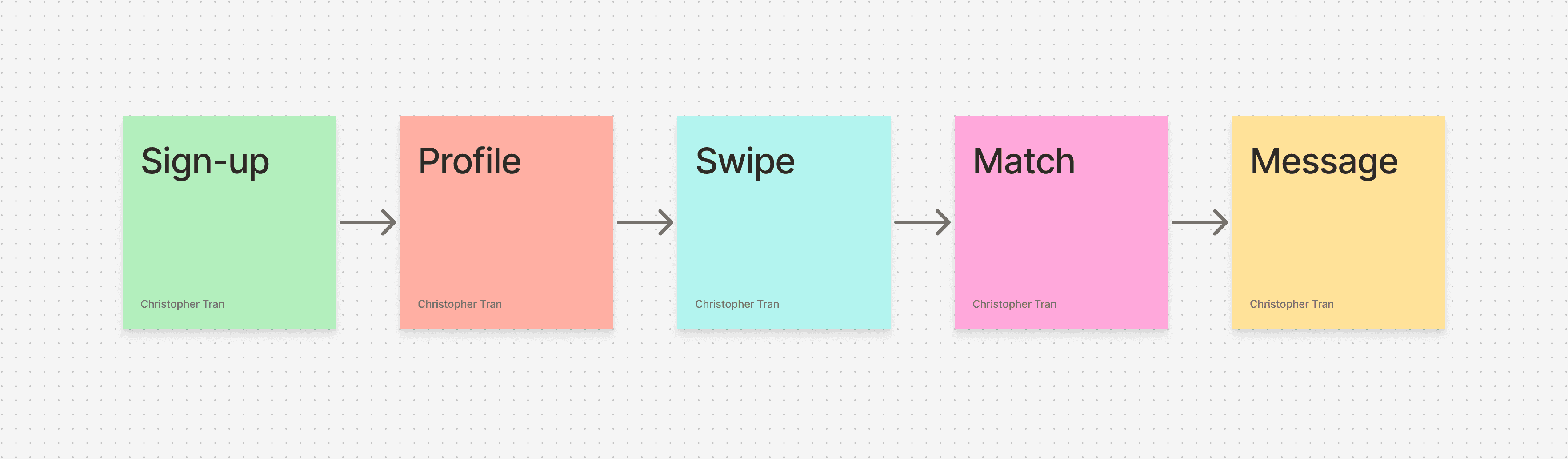
I mapped the complete user journey and identified key decision points:
Key IA decisions: Single onboarding path
Preference setup before swiping to ensure algorithm accuracy
Match-first, message-second to reduce cold messaging
Rapid Prototyping & Iteration
I "sketched" multiple layout options and tested with developers for feasibility. Weighing trade offs, technical restraints, and feasibility of design features and choices. We iterated and prototyped A LOT. Pictured above is just one page worth of graveyard designs.
Key iteration:
Initially designed a dashboard-style home screen, but developers flagged complexity. I simplified to a swipe-first interface that aligned with technical constraints and user expectations.
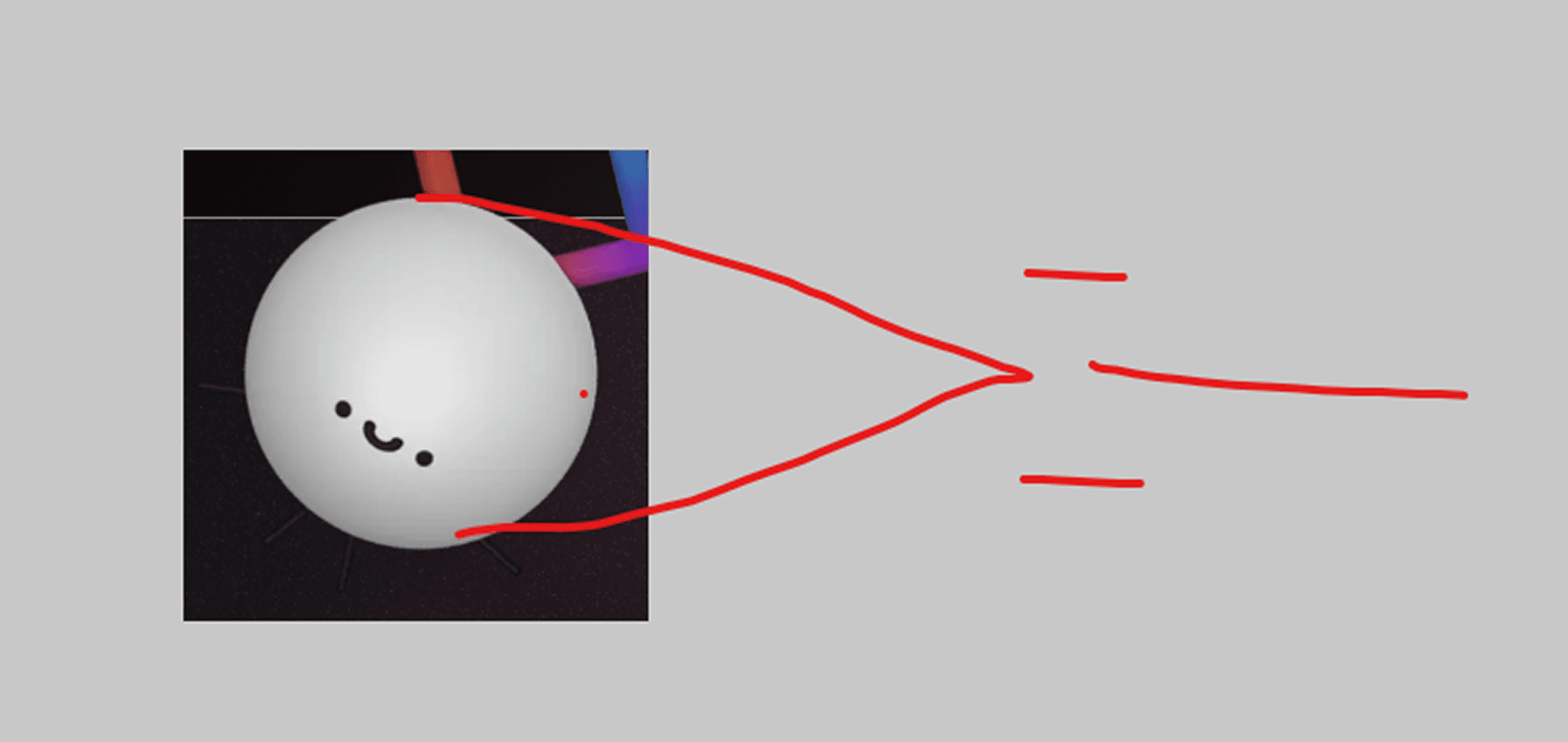
Had this super rough sketch given from someone on the development team and kind of ran with this idea for initial branding.
Trade-offs & Constraints
During early exploration, I considered incorporating deep personality profiling into the matching system. While this increased perceived sophistication, it significantly lengthened onboarding and risked user drop-off.
I chose to prioritize habit-based compatibility over personality-based matching. This simplified the experience and aligned more closely with real roommate conflict data, but reduced the novelty of the system.
Additionally, I intentionally limited the number of filtering options to avoid analysis paralysis, accepting less granular control in exchange for higher completion likelihood.
Brand Evolution
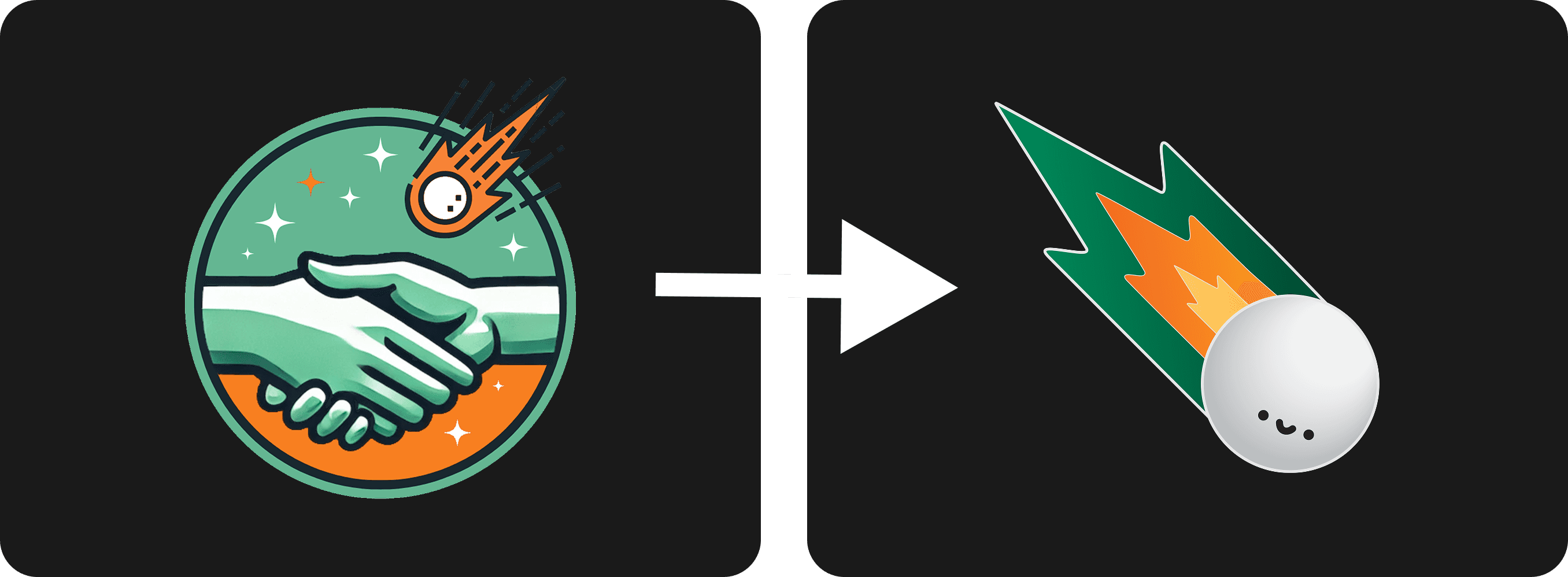
V0 — Concept-Driven
The original mark centered on a handshake within a meteor badge to symbolize connection and momentum. While expressive, it was overly detailed and didn’t scale well across digital surfaces.
Issue: Strong metaphor, weak scalability.
V1 — Simplified Symbol
I abstracted the concept into a cleaner meteor icon to improve clarity and recognition at smaller sizes. This reduced visual noise but felt generic and lacked distinct personality.
Trade-off: Better usability, less brand warmth.
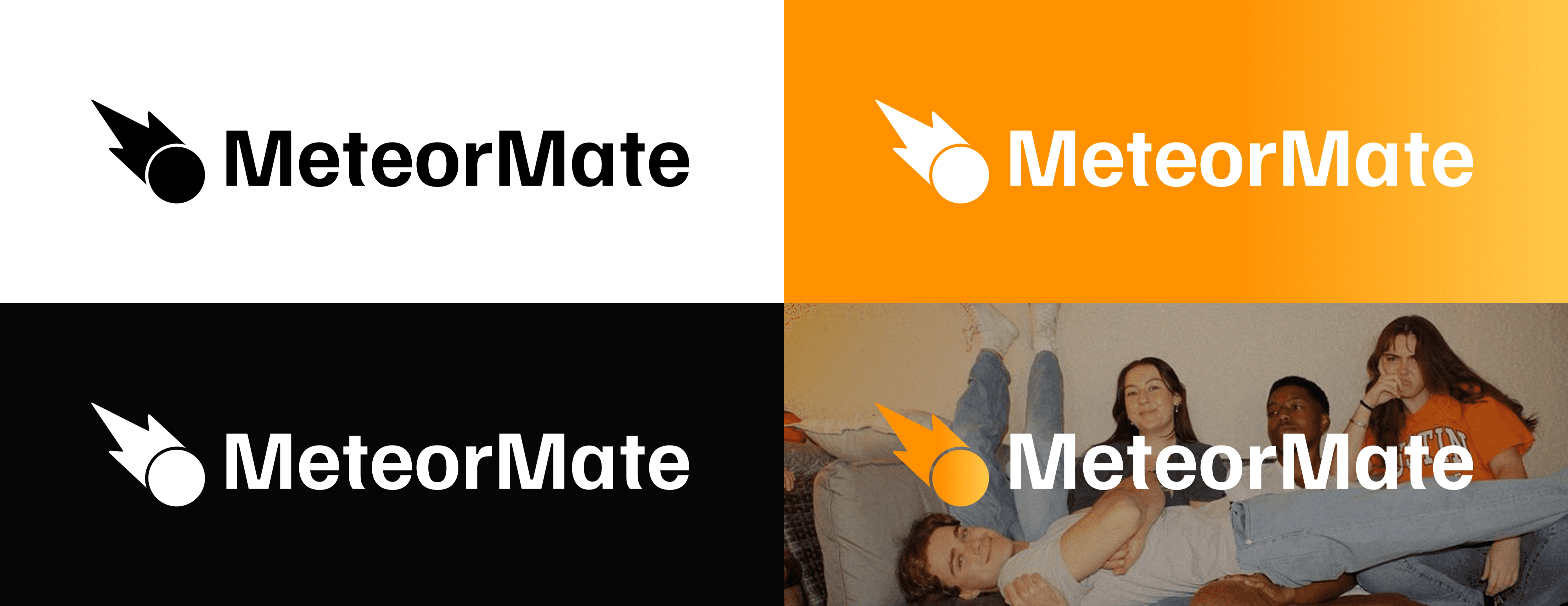
V2 — Scalable Identity System (WIP)
The current direction refines the meteor into a bold, minimal mark supported by a high-contrast orange accent and structured typography (Inter + Monument Grotesk).
This version prioritizes:
Digital scalability
Strong visibility in UI
Clear, trustworthy tone
The shift reflects a move from expressive symbolism to a product-ready identity built for clarity and consistency.
High-Fidelity Design
Lifestyle Preferences Survey
Key decisions:
Card-based selection with custom icons made choices feel intuitive—users could scan and select without heavy reading
3 options per category (vs. 5-point scales) prevented decision paralysis while covering the spectrum
Conversational copy ("When are you most active generally?") kept the tone friendly, not clinical
Impact: Simplified choices reduced completion time by 37% in testing.
Off-Campus Housing
Key decisions:
Lease status toggle immediately routes users down the right path
Semester/Academic Year/Year duration aligns with how UTD students actually think about housing (not months)
Range slider for rent ($600-$1400) allows quick budget entry without typing, reflecting realistic UTD-area prices
Main Matching Screen
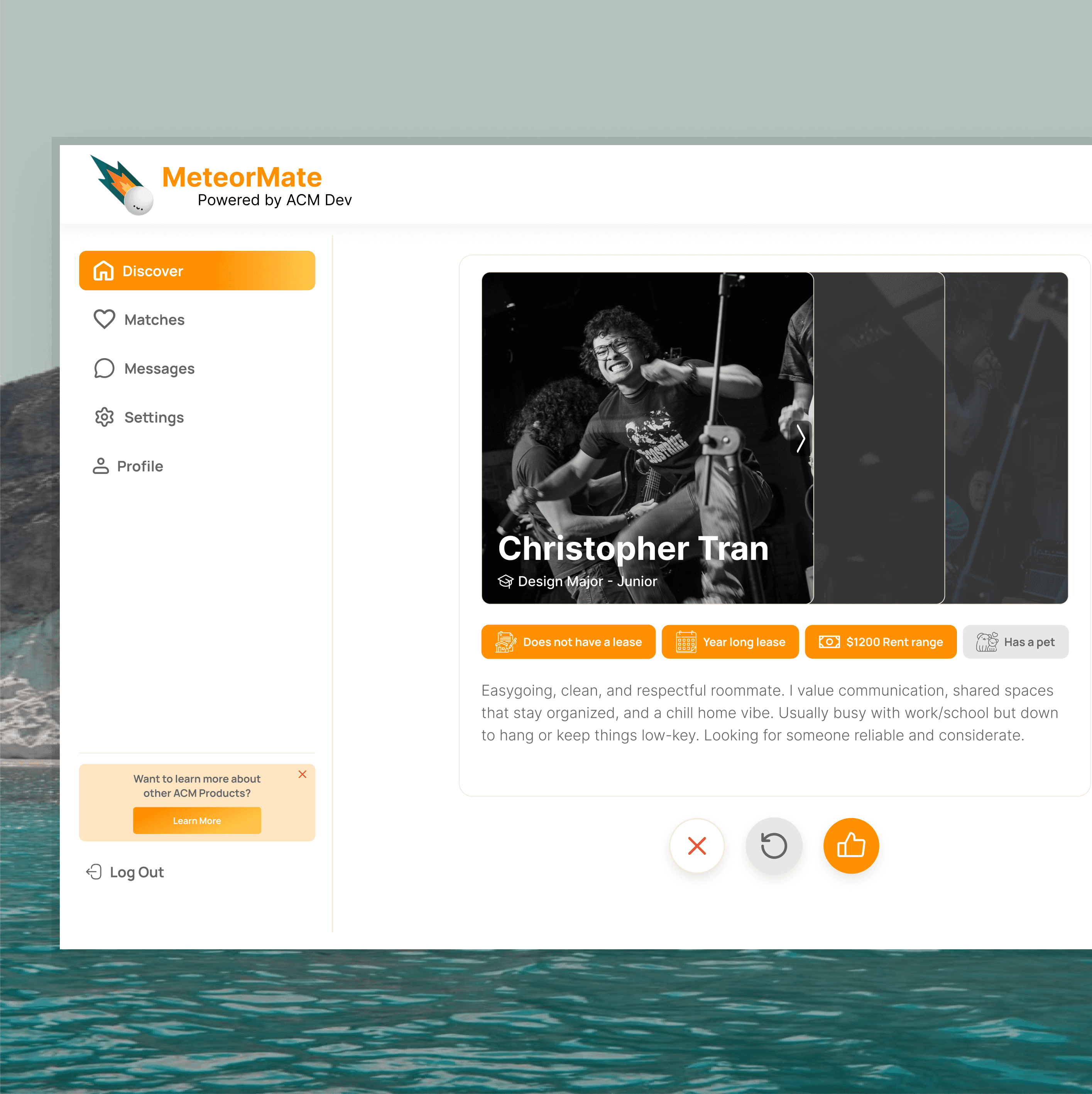
Goal: Enable quick compatibility decisions while avoiding dating app aesthetics.
Key decisions:
Thumbs up icon (not heart): Signals roommate compatibility, not romantic interest
Color-coded tags: Orange = matched preferences, grey = mismatches—instant visual feedback for decision-making
Three-button system (pass/undo/like) reduces anxiety about accidental swipes
Card flip interaction: Back of card reveals extended bio and hobbies. Flip animation adds polish while separating deal-breakers (front) from nice-to-haves (back).
Sidebar & Navigation
Right sidebar:
Recent Activity shows who liked you back, creating engagement momentum
Recently Viewed lets users revisit passed profiles—testing showed users often reconsidered matches
Left navigation:
Streamlined to 4 tabs (Discover/Matches/Messages/Profile) to focus on core user journeys
Messaging designed for constraints: ACM's server budget limits real-time messaging, so we designed async text-only messaging for MVP—can scale to media/real-time in V2 based on demand
Cross-functional impact:
Weekly engineering syncs surfaced technical limitations early, allowing me to design solutions that ship rather than block launch.
Current Status & Next Steps
MeteorMate is in active development with a Spring 2026 MVP launch target. I've completed the brand identity, core user flows, and high-fidelity designs for all MVP features. Currently, I'm addressing gaps in secondary flows like settings and profile management, cleaning up UI inconsistencies, and preparing for usability testing with UTD students. Once testing is complete, I'll iterate on findings and support engineering through launch. Post-launch, I'll analyze user metrics and engagement data to inform V2 feature prioritization and continued product improvements.
Key Takeaways
Leadership Means Making Trade-Offs
As lead designer, I had to balance user desires, technical constraints, and business goals. Advocating for lifestyle-first matching (vs. demographic filters) required convincing PMs and engineers—but research backed the decision.
Collaboration Unlocks Better Solutions
Daily~ syncs with engineers caught technical limitations early, preventing wasted design work. Weekly PM alignment ensured design supported business goals, not just aesthetics.
Research Drives Confidence
Studying competitor platforms revealed what worked (Tinder's intuitive swiping) and what failed (Roommates.com's outdated UI, Facebook groups' lack of verification). This research gave me conviction when defending design decisions, I wasn't guessing, I was building on proven patterns while addressing unmet user needs specific to UTD students.
MVP Thinking Ships Products
Perfect is the enemy of shipped. By focusing ruthlessly on core matching experience, we're launching a functional product rather than over-engineering features users might not need.