Cosign
Role
Product Designer
Date
Spring 2025
Project
Cosign - Rental Platform, Fintech
Overview
Cosign connects renters who need housing guarantors with individuals willing to cosign lease agreements. As Product Design Intern at Francois Labs, I redesigned the core product experience: dashboards, application flow, and landing page to reduce friction and build trust. The work delivered measurable impact across key business metrics.
Impact
Iterative UX improvements to hierarchy, messaging, and layout drove:
↑ 22% increase in traffic
↑ 17% increase in conversions
By improving clarity around shared financial responsibility, the redesign helped users better understand commitment risk before taking action.
Challenge
Business Impact
Cosign faced a 65% application drop-off rate and 58% landing page bounce rate—both well above industry benchmarks. High support volume
and slow application times were costing conversions and revenue.
User Friction
Users couldn't distinguish between renter and guarantor paths. The dashboard was overwhelming with no clear next steps. Missing trust signals and an 8-step application caused widespread abandonment.
Research
I analyzed user behavior data, support tickets, and competitive platforms to identify friction points. The data revealed three critical issues: confusing flows (30% entered wrong path), dashboard paralysis (40% never took action), and a 12-minute average application time (vs. 5-7 minute benchmark).
Key insight: Users needed clarity at entry, trust signals throughout, and a sense of progress.
Redesigning the Flow
I restructured the application from 8 disconnected steps to 4 logical sections, reducing cognitive load and providing clear progress indicators.
Key decisions:
Separated renter and guarantor paths from the start
Grouped related information together
Added visual progress tracking
Prioritized trust signals (security badges, clear explanations)
Guarantor matching flow — Selection process was confusing
Design Decisions
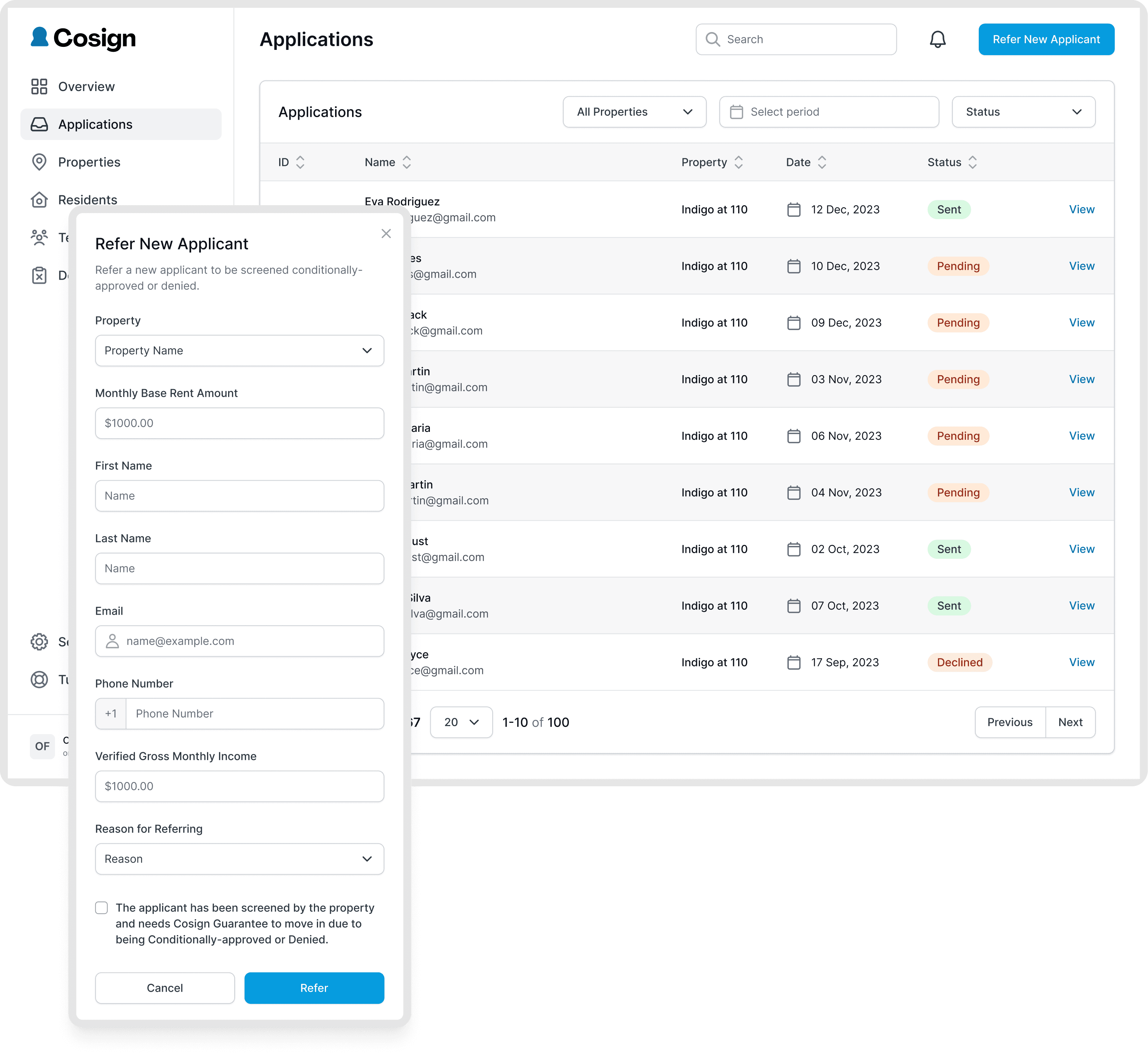
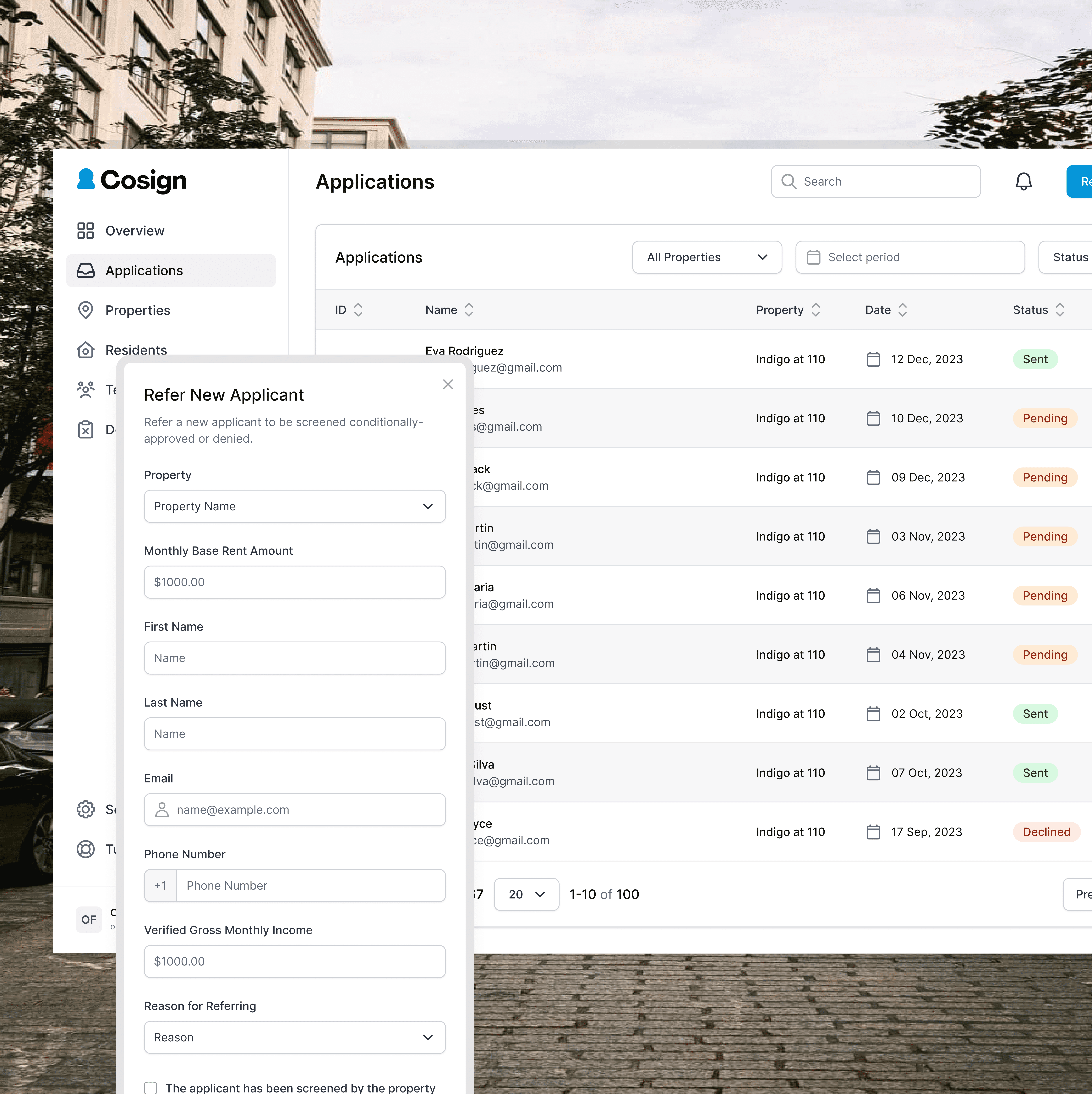
Metrics at the top for instant awareness, a prioritized action panel for what needs attention now, and a detailed table underneath for bulk management. Each layer serves a different user need without competing for attention.
Status badges use color and label together so managers can scan an entire page without reading every row. The "Refer New Applicant" modal keeps users in context rather than routing them elsewhere — less friction on the most frequent task.
Landing Page
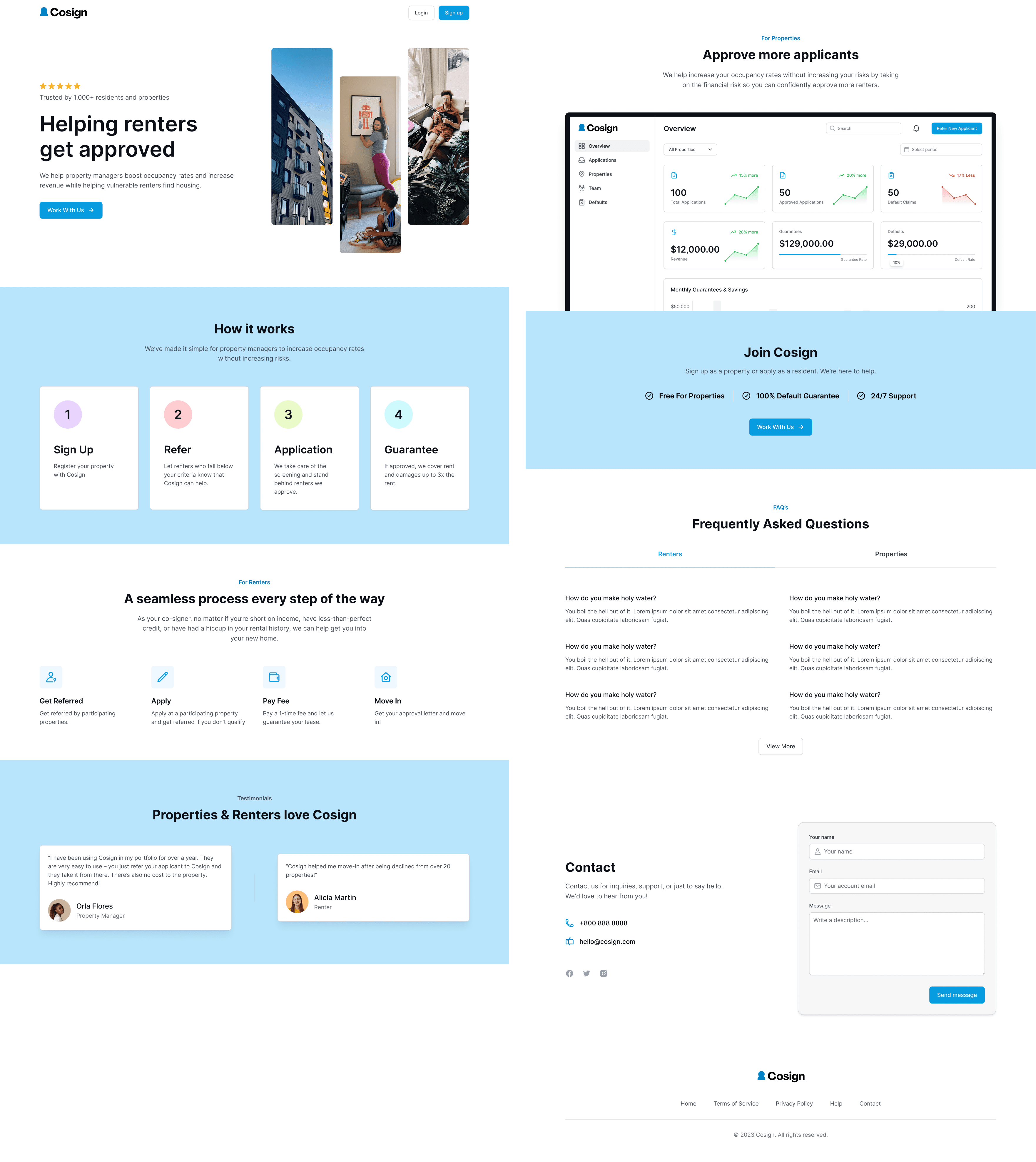
Housing is already stressful. The landing page shouldn't add to that.
Everything here was designed for someone who's been declined before, doesn't fully understand co-signing, and is skeptical this will actually help them. That meant plain language over clever copy, a calm palette that doesn't feel like a sales pitch, and a four-step process that makes the whole thing feel manageable before they even sign up.
For property managers, the pitch is just as simple — more approvals, less risk, no cost. The dashboard preview does the selling so the copy doesn't have to.Both audiences get their own space on the page. No one has to wade through information that isn't for them.
Key Takeaway
Small Changes Compound
Individual UX improvements—clearer headlines, better grouping, prominent CTAs—combined to drive double-digit metric improvements.
Trust Is Non-negotiable
Users couldn't distinguish between renter and guarantor paths. The dashboard was overwhelming with no clear next steps. Missing trust signals and an 8-step application caused widespread abandonment.
What I’d Do Differently Next Time
This project taught me that product design is about solving problems, not making things pretty. The 17% conversion lift represented real people who successfully found housing because the experience no longer stood in their way.
Working on a real fintech product showed me how design decisions directly affect business outcomes, and how removing friction can unlock growth.